The Gothic Horror of ‘What Remains of Edith Finch’

If we lived forever, maybe we’d have time to understand things. But as it is, I think the best we can do is try to open our eyes… and appreciate how strange and brief all of this is.

What Remains of Edith Finch, Giant Sparrow, 2017

What Remains of Edith Finch is obsessed with death. Its characters, physical structures and narrative all revolve around the topic, morbidly recounting the demise of each family member aside from its sole survivor, Edith. Playing Edith Finch for the first time, I was struck by the forlorn atmosphere and phantasmagorical elements of the gameplay. Walking the abandoned hallways of the Finch home, I was reminded of classic 18th and 19th century horror stories – like Manderly Estate in Daphne Du Maurier’s Rebecca, these rooms were haunted by a distinct sense of absence. The game is consistently stressing to you that the person who belongs in this room is no longer with us, yet the space they once inhabited refuses to forget them. This feeling of melancholia and loss which cloaks the gameplay of Edith Finch is distinctly Gothic in genre, and I haven’t come across anything quite like it in video games before, or since I played it.

Now, to clarify, What Remains of Edith Finch isn’t really a horror game in the traditional sense of the term. There aren’t jumpscares, there are no real ‘monsters’ – the majority of the gameplay is just you as Edith, exploring the house and unraveling the Finch family mystery through found objects. The tragic tale is told through letters, diaries, comic books and photographs, recalling the epistolary formats of popular Gothic novels such as Bram Stoker’s Dracula and Mary Shelley’s Frankenstein.

Considering this, I feel that writing about this game from the perspective of a horror blog is justified, as the game approaches its storytelling through these classic ‘Gothic Horror’ tropes and imagery, prompting the player to contemplate it’s morbid themes in a more psychological way. Though it doesn’t use typical horror game techniques to scare the player, Edith Finch’s contemplative, eerie tone asks the player to consider their mortality and perception of the world around them in a much deeper manner. It’s retrospective focus on life and death is profoundly macabre in tone – without the existence of Gothic Horror, What Remains of Edith Finch would certainly not be the same story.

In order to fully discuss this game, I’m going to have to delve into spoiler territory. I don’t usually put any precursory warning for this sort of thing in my writing, but I’d strongly suggest that What Remains of Edith Finch is a game worth experiencing for the first time by yourself. It’s surprising, mysterious, and subverts player expectations right from the get-go. I’d also comment that it’s narrative impact almost hinges on you personally being in control of the character, so bear that in mind before reading if you’re considering playing this game.

To summarise, What Remains of Edith Finch is an acclaimed ‘walking simulator’, released in 2017 by publisher Giant Sparrow. The narrative follows the last living member of the Finch family, Edith, as she returns to her towering, abandoned childhood home. This house itself almost becomes a character, its enormity and multiple secret passages cloaking the history of the Finches in mystery. When first entering the house, the player notices that each sealed bedroom door has a peephole, memorialising and preserving the living space of a deceased relative. Over the course of the game, Edith gains entry to the entirety of the Finch family home, each room featuring a short vignette revealing the tragic fate of each of her predecessors. Here, the player embodies that relative in their final moments, forced to live out the tragic death of each family member in order to discover the truth behind it.

Having established Edith Finch’s basic narrative, it’s not difficult to see how this game could be considered ‘Gothic’. Gothic stories perhaps have some of the most identifiable tropes in fiction – the spooky, decaying castle, the ever-present storm, the supernatural elements etc, etc, – however, I’d argue that one of the most defining characteristics of this genre is that of the ‘broken’ family. American Gothic horror tends to center around fractured families with difficult relationships – Poe’s Fall of the House of Usher being perhaps the most notable. The horror here lies hidden in plain sight behind the front door, unbeknownst to neighbours, friends or acquaintances. In the case of the Finch Family, a dynastic curse causes each family member’s untimely death. Only one child of each generation is left to continue the family tree, carrying with them the grief and loss of their siblings. Edith’s great-grandmother, Edie, is obsessed with this idea. She’s the one creating the peepholes and memorialising the bedrooms of her deceased family – in some ways, the curse could be considered a self-fulfilling prophecy.

Here, it would probably be pertinent to note that Gothic stories are also very much defined by their preoccupation with death. In Gothic Horror, death permeates the narrative, with most stories featuring the demise of a character central to the story. Suffice to say that the genre’s use of paranormal, supernatural or monstrous occurrences is rooted to this fascination with death and the process of dying. In the game, the Finch Family home alone is evidence enough of this gothic impulse – their house is surrounded by poisonous foxglove flowers and empty birdcages surround great-grandma Edie’s room, like tiny versions of each bedroom in the house. Because of the family curse, the Finches’ lives are delicately intertwined with death. It is part of their daily lives, looming like an anvil that threatens to drop at any minute. During the game, it’s mentioned that when family patriarch Odin moved the Finches from Sweden to the USA in the early 1900s, the first structure built on the property was the graveyard, further evidencing the family’s obsession with their morbid fate rather than the importance of actually living. 

The culmination of these Gothic themes of family and death can be found within the bedrooms themselves, fashioned to be shrines to the person that once lived within. These bedrooms provide the key to the story itself – only within the space of the rooms does the narrative of Edith Finch progress, suggesting a need to look back to the past in order to move forward, for the Finches.  Upon entering Molly’s room for the first time, Edith remarks that she feels as though she has ‘stepped behind a painting,’ demonstrating the liminality of these barred-off spaces within the Finch home. To Edith, the rooms represent crossing the threshold between life and death, traversing back through the lives of her ancestors in order to gain a greater understanding of her family history. In gameplay, this is taken literally. Through objects taken from each room, Edith is transported to see the world through their perspective – though the game is told in first person, this shift in viewpoint is demonstrated by a change in clothing and scenery. During each vignette, the player embodies each member of the Finch family tree, forcing them to also become complicit in acting out their unavoidable death.

The dedication of space to the deceased within the home likens it to a tomb, with the living literally residing amongst spaces once inhabited by the dead. By the time Edith’s generation comes along, the house has been expanded upwards to accommodate space for more dead Finches – they are essentially residing atop the graves of their family. Thus, over the course of the game, these enshrined rooms are transformed into portals between the boundaries of life and death, allowing Edith to enter the mind of her passed ascendants through personal objects eulogising their demise. 

Molly’s story is the first we experience within the game, and establishes this idea within Edith Finch. In the game, Molly is sent to bed hungry, without dinner. In retaliation she hunts round the room for things to snack upon – running out of options, she suddenly transforms into a cat to find a larger meal. Following this is a disturbing sequence, during which she becomes an owl, then a shark, then a man-eating sea-monster; the thoughts of which are narrated by sweet little Molly. The end of the story loops back to the bedroom, where the sea-monster comes back to finally eat Molly, herself. It’s… dissonant, to say the least.

Molly’s story, played through in its entirety. 

Though in gameplay Molly shapeshifts into a cat, an owl, a shark, and a sea-monster in turn, her death can be explained through entirely natural means. At the start of the episode, Molly consumes holly berries and a whole tube of toothpaste in hunger – both of which are toxic when eaten in large amounts. As a child, her overactive imagination (or toxin-induced hallucination) takes over the diary, prompting these phantasmagorical sequences throughout the text. 

Unsurprisingly, considering this, there’s something dreamlike in each vignette. By introducing us to Molly’s story first, the player is primed for otherworldly aspects within the game. Her story suggests to us that there is something strangely uncanny about both the Finches and the family house, without needing to implement any additional gameplay elements to further demonstrate this. After Molly’s story, What Remains of Edith Finch tends to be a little more down to earth in narrative style, but the player retains that feeling of generalised strangeness when thinking about the Finch family for the rest of their playthrough. These elements of magical realism also follow suit with gothic tradition – dreams, premonitions and the supernatural are each deeply entangled with discussions of death within the Gothic genre. 

Furthering this sense of the Gothic in What Remains of Edith Finch, the majority of the Finch Family are also revealed to pass in extreme, and unusual ways. Being complicit in each death, the player is forced to act these out, heightening the horror which the narrative attempts to induce. What’s effective about the episodic approach is that each story will impact each player in a different manner – some vignettes may seem ridiculous or far-fetched, whilst others are like an emotional punch to the gut. 

For me, Lewis’s death struck the hardest. Here, we read a letter to Edith’s mother from her older brother’s psychologist – an apology for not noticing the warning signs sooner. Lewis worked in a cannery and was jaded with his life, often falling into daydreams during his monotonous workday. Gameplay wise, this is conveyed by splitting the controller in half – one thumb-stick controls Lewis’s hands chopping heads off salmon in the cannery, and the other controls his daydreams on the other side of the screen. Gradually, these daydreams begin to overtake the screen. They’re more complex, interesting and colourful than the cannery, and as players, the hand movement associated with his monotonous job fades into the background and becomes automatic. Like Lewis, we become enamoured with his fantasy world. The vignette ends with us as Lewis, bowing his head to be crowned king of his medieval daydreams – in reality, he places his head on the chopping block. 

Lewis’ story, played through in its entirety.

Thinking about the gothic from a gaming perspective, this segment of the story becomes particularly interesting to me. In epistolary Gothic literature, the style of writing allows the reader to feel more involved in the story, heightening the horror it attempts to induce. Reading Dracula feels like finding a hidden cache of letters in a drawer, recounting some awful events which you cannot confirm the authenticity of. It adds to the sense of horror and perhaps injects an element of realism – especially at its time of release. In comparison, What Remains of Edith Finch does epistolary horror in such a uniquely Gothic way. Not only is it dreamlike and boundary-breaking, allowing the player to travel through time and mortality; it also makes the player complicit in each death, and thus, the family curse. In playing Edith Finch, the player themself becomes afflicted with the curse, entering the Finches’ dynastic cycle of dying and grieving, over and over again.

In the case of Lewis’s story, specifically, it breaks the fourth wall to put you within his headspace at the time of death. Gameplay-wise, The hand movements associated with his daydreaming take precedence over the actions associated with cannery, which soon become automated and robotic. The player is forced into feeling the same way as Lewis himself, losing interest in his ‘real life’ and falling deeper and deeper into his delusions of grandeur. This heightens the sense of tragedy and horror within the player when witnessing his passing, as we gain a deeper understanding of his mental state. In allowing the player to ‘become’ Lewis, his story becomes more realistic, and plausible. Thus, not only is the narrative of Edith Finch entrenched in gothic themes, but the gameplay itself is, too.

I also think it’s interesting to contrast Edith Finch’s approach with other games which could be categorised in the Gothic genre. Examining tropes of Gothic horror in games such as Amnesia: the Dark Descent and Resident Evil 4 reveal an impulse to default to the more monstrous side of genre when games are created, drawing greater inspiration from the creatures of Gothic classics like Jekyll and Hyde, Dracula and Frankenstein in order to construct their stories. In video games, one expects action, primarily, so it’s understandable as to why horror games like Amnesia and Resident Evil choose to go down a more monstrous route – especially in the case of Resident Evil, where its monsters preceded the gothic tone. In horror games, creatures create room for chase scenes and suspense, something which allows developers to build interesting and fun mechanics from within the narrative story.

As a walking simulator, Edith Finch can’t do this, and neither does it aim to. It’s a game that’s largely unconcerned with actual gameplay, instead using the interactive nature of its medium to construct a detailed atmosphere in order to convey its story. Unlike games which focus on the monsters of its gothic universe, Edith Finch’s narrative still feels somewhat grounded in reality despite all its boundary breaking, supernatural elements. For example, both Molly and Lewis’ dreamlike sequences implement fantasy elements into their gameplay, but at their core there remains a deep sense of loss and tragedy that comes with the death of a family member – something that is realistic and relatable on a human level. This is ultimately what more subtle versions of Gothic horror are all about, they encourage the audience to question the limitations between fantasy and reality, delusion and actuality, and the implications behind this for the people within the story. It’s what Edgar Allen Poe’s cerebral, supernatural Fall of the House of Usher is to the likes of Bram Stoker’s Dracula within the Gothic Literary Canon, and I think that’s what makes Edith Finch feel so unique. Rather than approaching horror with a bloody, in-your-face demon chasing you down the hallway, it prompts the player to consider their mortality. This, in many ways, is far more terrifying than the former.

(As a side note, this is not to say that Gothic horror without monsters is in any way superior to those that choose to include them – I’m also a huge fan of creature features!)

As previously mentioned, I still don’t really consider Edith Finch to be a ‘horror’ game, despite its broad ludo-gothic themes, but that isn’t to say that the game is without morbid aspects. In it’s stark presentation of grief and loss through the tropes of gothic horror, the game draws the player in and makes them complicit in the curse, prompting a deeper reflection on these themes within the player themselves. Creative director Ian Dallas has previously stated that they set out to create ‘”an interactive experience that evokes what it feels like to have a moment of finding something beautiful, yet overwhelming.” In spite of Edith Finch’s preoccupation with these sometimes ‘overwhelming’ elements of violent, and untimely death, there is beauty to be found in the protagonist’s graceful acceptance of the curse. In reliving the experiences of her ancestors, Edith recognises that death is just a part of life – a realisation that is scary and saddening, but somewhat relieving in the context of the ‘curse’. In Edith Finch, death is posed as an inevitability that shouldn’t be ignored or swept under the rug, like her mother Dawn would encourage. Whether the curse on the Finch Family truly exists is not the ‘point’ of What Remains of Edith Finch. The curse is simply a mediation on the fact that we are all afflicted with the ‘curse’ of living – everything must come to an end, eventually. No-one is truly immune to tragedy, and nobody in the game recognises this as much as Great-Grandma Edie. Through these eyes, Edie’s dedication to the memorialisation of her family no longer appears to be so morbid, and the remembrance of those who have passed can be seen as more of a celebration of their lives, as opposed to a fixation upon the end of it. As a piece of Gothic art, What Remains of Edith Finch reminds us of what we leave behind after we pass, and to make the most of what we have whilst we’re still here.

‘Hell is a Teenage Girl’: Jennifer’s Body and Feminine Sexuality

Needy: You’re killing people?

Jennifer: No. I’m killing boys.

Jennifer’s Body, Karyn Kasuma, 2009

Browsing the movie aisles sometime in the early 2010’s as a young teenager, I remember coming across Jennifer’s Body. I took one look at Megan Fox’s objectified body on the cover art and thought, ‘This film isn’t made for me’. I, like many others at the time, presumed that this film was a softcore-porn cash-grab aimed at teenage boys. I dismissively expected a vapid, vaguely misogynistic slasher storyline, and turned to pick up some other movie instead. Later in my teen years, I caught Jennifer’s Body while channel-flipping late at night and realised just how wrong these preconceptions were.

Nowadays, I consider this film to be one of my favourites from the noughties. It’s like all the best themes from Mean Girls, Tomie and But I’m a Cheerleader were boiled down into one big melting pot, and the result is a cracker of a movie. Ahead of it’s time, Jennifer’s Body lures you in with stereotypical high-school movie tropes, only to surprise the viewer with an exploration of cultural perceptions towards women’s bodies and queer sexuality. Jennifer’s Body was directed by Karyn Kasuma and written by Diablo Cody; truly a film written for women, by women – and as such, it’s a damn shame that the marketing of this movie caused so many girls like me to make the same assumptions. Thankfully, the film has seen a resurgence in popularity online in recent years – particularly amongst groups of queer women in their teens and twenties. And for good reason.

Released in 2009, the film follows the tumultuous relationship of Needy and the titular Jennifer. Needy Lesnicki (Amanda Seyfried) is, for lack of a better term, your typical ‘Plain Jane’, insecure and reliant on her best friend for approval. Also, she’s ‘totally Lesbigay’ for Jennifer, following her every whim and hanging on to every last word. Portrayed by Megan Fox, Jennifer Check is an Alpha Bitch Cheerleader. You know this character already – she’s Regina George, Betty Rizzo and Heather Chandler. Except, after rock-band Low Shoulder performs a botched Satanic ritual on Jennifer, she also eats boys. Through a distinctly female gaze, Kasuma explores the power-play of Jennifer and Needy’s complex relationship, the horror aspects of the film acting to raise the stakes and amplify their feelings to an extreme degree. Through its gory melodrama, Jennifer’s Body makes the choice to center predominantly around the teenage female experience, contrary to what it’s misguided marketing campaign would lead you to believe.

JENNIFER’S BODY, 2009, Dir. Karyn Kasuma, Dis. 20th Century Fox

Succubus Sexuality in Jennifer’s Body

One of the ways in which Jennifer’s Body approaches discussions of female sexuality is through the deconstruction of the succubus, a trope which pulls many of its narrative elements from archaic belief in women’s nymphomania. The historical blueprint for Jennifer’s succubus-character is Lilith, of Mesopotamian and Jewish myth. In the Alphabet of Ben Sirach, Lilith was the first wife of Adam, deemed demonic as she believed herself to be his equal. In the text, Lilith will not ‘lie beneath him, but only on top’ – this refusal to submit to patriarchal sexual norms damning her to the dark side. Succubae are typically women and typically hypersexual – though Lilith had the added bonus of being a kidnapper, a child murderer, and a seducer of married men, to boot. In monogamous societies, these stories of demonic, seductive women are often believed to be constructed to prevent married men from cheating, reinforcing religious values against adultery. Unfortunately, they also had the nasty side-effect of strengthening negative perceptions towards female sexuality in popular thought.

We see this mindset too, in Jennifer’s Body. Indie-boy members of the band Low Shoulder remark that Jennifer is ‘exactly what they’re looking for’, wrongly presuming her to be a virgin. Though her virginity is valued in the context of their satanic ritual in the movie, this comment draws attention to the value placed upon a woman’s chastity, even as recently as the late 2000’s. I’d also attest that the ritual adds a second layer of meaning upon this reading, too – the sacrifice of a virgin woman is intricately linked with ideas of ‘purity’ and ‘innocence’ in relation to her chastity throughout history. This trope is rarely applied to men, demonstrating the double standards which exist between the sexes in regards to desire and whether one decides to act upon it. In a film that is so filled with modern colloquialisms (for the late noughties), the use of such an archaic ritual scene creates a sense of dissonance. In the context of sexuality, the use of virgin sacrifice in Jennifer’s Body highlights the fact that these ideas are outdated, stemming from belief systems that were often implemented to suppress women’s access to sexual agency.

JENNIFER’S BODY, 2009, Dir. Karyn Kasuma, Dis. 20th Century Fox

Later in the film, we see the events of the ritual sacrifice itself. The scene is graphic and harrowing, strongly parallelling a rape scene. During this sequence, Jennifer is tied to a rock whilst the male band members jeer around her, taunting her with the threat of their plans to sacrifice her body for fame and fortune. Nicholai brandishes a knife which is in clear sight throughout the scene, cruelly taunting her prior to the assault. In her highly influential work ‘Men Women and Chainsaws’, Carol Clover identifies the knife as a phallic symbol within the horror film – a stand-in for male sexuality. Through this lens, the way in which Nicholai repeatedly thrusts the knife into Jennifer’s exposed stomach whilst the rest of the band look on in spite of her anguish can easily be read as a gendered violation of her sexualised body. This attack upon Jennifer’s presumed virgin body in the act of murder also exposes contemporary attitudes towards female sexuality at the time: once it is no longer considered chaste, it is no longer useful, and can be disposed as such. This is reflected by the band’s abandonment of her dead body at Devil’s Kettle Falls – once she has been ‘used’ for the ritual and her virgin blood is spent, she is no longer valuable. Therefore, through both the ritual and the discussion of virginity as an ideal so early within the film, Kasuma and Cody draw attention to the ways in which women’s bodies and sexualities are held to archaic historical standards, even within our contemporary era. However, it must also be noted that because Jennifer was not a virgin, her transformation into a powerful demon takes place.

Once the cause for Jennifer’s transformation into a succubus is revealed midway through the movie, Jennifer’s Body essentially follows the structure of a rape-revenge film, and the viewer therefore gains sympathy with Jennifer despite her status as a movie ‘monster’. She doesn’t choose to transform into a succubus, however, in doing so Jennifer regains power over her sexualised body, using it to build strength, influence and retribution in the wake of her assault. As a murderous succubus, her revenge against this violation of her body is not just directed towards the members of Low Shoulder, but the male population of the movie itself. Jennifer’s victims can be considered as those who dare to view her in a sexualised light, boys who reduce her down to nothing but the body she inhabits, and the sexual potential she represents. It’s no coincidence that her initial murders include those who dare to ask her out on a date before her ‘change’. When ‘fed’, Jennifer can’t be hurt nor killed, and thus cannot be victimised for her objectified body in the same way as she was during the ritual. Instead, Jennifer makes the choice to turn this gendered exploitation on its head, using her sexuality to lure in her kills.

JENNIFER’S BODY, 2009, Dir. Karyn Kasuma, Dis. 20th Century Fox

Through this representation of Jennifer’s transformation into a succubus, Kasuma and Cody deconstruct both the hypersexualisation of the female body and the societal ideal of women’s chastity, tackling these concepts head on. Unlike mythic representations of the ‘fallen woman’ or the demonically evil succubus archetype, Jennifer’s Body demonstrates the effects of societal pressures on women’s sexuality, taking this into account when considering the actions of the antagonist. In its choice to explore these pressures placed upon women, through both the historical influences of ideas surrounding women’s virginity and the consequences of patriarchal dominance in sexual situations, the film demonstrates a female perspective upon these issues. Though she is written to be a succubus, and therefore a ‘monster’, ultimately, Jennifer is, and was, just a teenage girl, transformed into something ‘evil’ as a direct result of male perceptions of her sexuality. Jennifer’s power comes directly from her objectification as a succubus, allowing women to reclaim agency over tropes that historically hurt them within this film. In a way, she uses the male gaze as a weapon, allowing her to succeed in spite of the patriarchal culture that works against her. Through her transformation, Jennifer’s character ultimately deconstructs ideas of the madonna-whore complex which are so intricately linked with women’s sexuality.

It should also be mentioned that, as a rape-revenge film, Jennifer’s Body doesn’t let Low Shoulder get away with their actions unchecked. Thanks to a demonic bite from Jennifer in the film’s final battle, Needy retains the ability to levitate. This allows her to seek revenge upon the band members by escaping the psychiatric facility she is placed in following the murder of Jennifer – we’re treated to a montage of their bloodied hotel room during the end credits. Reading the film in this way, it comes as no surprise, then, that much of the resurgence of this film’s popularity came to light in around 2018, coinciding with the #MeToo movement.

(As a side-note, I do often wonder about the teenage boys and men drawn into this film by the marketing campaign – drawn in by promises of shots that appeal to the male-gaze, expecting Jennifer’s Body to be a typical, sex-centered narrative focussed solely on the objectification of Megan Fox, only to be devoured by its subversive story in the same way as the boys in the film.)

JENNIFER’S BODY, 2009, Dir. Karyn Kasuma, Dis. 20th Century Fox

‘I go both ways’: Sapphic themes in Jennifer’s Body

Furthering the film’s exploration of feminine sexuality in the late 2000s, the relationship between Needy and Jennifer delves into themes of queerness and desire. As mentioned before, Needy’s infatuation with Jennifer goes beyond that of a normal friendship – to any queer woman that’s fallen in love with a friend, her pining is obvious. In the opening scene, the camera focuses on Jennifer’s face as Needy looks on with a loving gaze, enthralled by her movements. Needy addresses the audience directly, stating that ‘Sandbox love never dies’ – though she doesn’t really need to tell us that, because this is so clearly demonstrated from what we see on screen. Needy’s feelings are tentatively reciprocated by Jennifer, but only when this is convenient for her.

Unsurprisingly, considering my above analyses of Jennifer’s assault, sexual situations between men and women are portrayed as violent, or at least uncomfortable in Jennifer’s Body. As a succubus, Jennifer uses sex to entice and kill her male victims, creating a link between violence and heterosexuality throughout the film. I’m reminded particularly of the scene where Needy loses her virginity to her boyfriend Chip. What should be a romantic, intimate moment within a relationship is instead invaded with shots of Jennifer on the hunt, seducing, trapping and aggressively murdering her male victim. Through some supernatural link, Needy seems to sense this danger, and is hounded by visions of blood seeping through the ceiling, accompanied by a demonic apparition of Jennifer in the corner of the room. The ambience is dark and blue, implying danger and fear throughout the entirety of the scene. Throughout this sequence, Chip also mistakes Needy’s cries of fear for pleasure – this further reinforces the link between violence and heterosexual relations throughout the movie. Even between romantic lovers, miscommunication and hurt invade intercourse, implying an inherent sense of discomfort. Thus, sex between men and women is inextricably linked with pain in Jennifer’s Body.

JENNIFER’S BODY, 2009, Dir. Karyn Kasuma, Dis. 20th Century Fox

Contrast this scene with the intimacy of Jennifer and Needy’s kiss, where the lighting is soft and shots linger on the closeness of their lips and bodies. There is a sense of comfort and familiarity compared to the aggression and violence shown during scenes of heterosexual intercourse or seduction. The camera is pulled up close to their bodies, focused on soft, caring touches, a harsh contrast with the way in which male-female sex is used for leverage, power and control within this movie. Though one could argue that this scene could be viewed through the lens of the male gaze, I suggest that these shots are used to further emphasise the divide in representation between male/female and female/female relationships in Jennifer’s Body. Whereas during instances in which these women engage in sexual acts with men shots appear far away and almost clinical, the closeness of the camera to their bodies within this scene heightens the sense of romance and desire, further emphasising the distinct differences between straight and queer relationships within the movie.

In Jennifer’s Body, a queer reading of this film and its handling of heterosexual versus homosexual relationships could imply a critique of compulsory heterosexuality, the idea that straightness is both assumed and enforced by patriarchal/heteronormative society. This is an experience which is particularly common amongst women-loving-women – perhaps as a result of  the negative connotations that are associated with female sexuality within society. As sex and active desire is culturally considered to be reserved for the male counterpart of the relationship, women are expected to take the passive role within a relationship, and thus, feelings of sexual attraction between two women becomes far more difficult to approach. Needy’s hopeless pining for Jennifer throughout the movie is particularly evocative of this experience – though she clearly loves her in a way that is beyond friendship, she remains inclined to pursue a sexual relationship with her boyfriend Chip, as this is the societal norm. Needy’s vehement denial of her feelings towards Jennifer whenever this is brought up also provides further evidence for such a reading. 

JENNIFER’S BODY, 2009, Dir. Karyn Kasuma, Dis. 20th Century Fox

This is also demonstrated in scenes where Jennifer and Needy engage in sexual acts with men, where the motivation behind this is out of either necessity or expectation. For Jennifer, if she doesn’t seduce and kill her male victims, she’ll lose all her power, becoming weakened and vulnerable – men are simply easy targets, because heterosexuality is assumed. For Needy, it’s what girlfriends and boyfriends ‘do’, a compulsory hurdle that must be jumped within their relationship in order to progress to the ‘next level’ of romance. Contrast this with the kiss shared between Needy and Jennifer, a scene portrayed to be natural and comfortable, done in private because they want to, rather than because they feel in any way obliged to. Throughout the film, as Jennifer gains a more ‘masculine’, dominant aspect to her sexuality in her demonic transformation, these walls of heteronormativity begin to slowly break down within their relationship and their desire for one another becomes easier to act upon, culminating in the kiss scene.

If anything, I’d argue that a reading of Needy and Jennifer’s relationship as objectifying/appealing to the male gaze is heavily influenced through the mishandled marketing campaign – as we have seen, this film continually subverts viewer expectation and defies societal perceptions towards women’s bodies. In portraying genuine romance between two women – especially romance addled with the pressures of compulsory heterosexuality – Kasuma and Cody almost construct a queer, female gaze throughout Jennifer’s Body, displaying the experiences of those who feel trapped by the societal constraints projected upon them and are unable to pursue their true desires outside of closed doors. Although the relationship goes no further than the kiss scene, I’d suggest that this, too, says a lot about compulsory heterosexuality in film. Even as recently as the late noughties, portraying romantic homosexual relationships in mainstream cinema was often censored, influenced by Hollywood’s Hays Code and its rules against the portrayal of ‘immoral sexual relationships’. Though these guidelines have long been abandoned, their impact on modern filmmaking is often evident. Therefore, in a meta sense, Jennifer and Needy’s relationship is also constrained by assumed heterosexuality from the making of Jennifer’s Body as a film.

JENNIFER’S BODY, 2009, Dir. Karyn Kasuma, Dis. 20th Century Fox

Despite this, Karyn Kasuma and Diablo Cody still manage to approach issues of women’s sexuality with tact and nuance, using the typical ‘high school movie’ format to subvert viewer expectations and confront social norms surrounding women’s sexuality. Typical tropes such as the ‘damsel in distress’ are subverted, instead presenting us with a powerful female villain who is both in control of her sexuality and is able to use this as a weapon against those who would attempt to objectify her. In using the Succubus trope, Jennifer’s Body looks to the past to tackle our modern preconceptions towards women’s bodies and feelings, whilst simultaneously attacking the high regard in which women’s virginity is held as a result of archaic belief systems. As a succubus, Jennifer reclaims power through the use of her objectified body in order to gain power and control, turning both social norms and the trope itself on its head. The film then further expands upon this to explore themes of queerness and desire, and the ways in which societal expectations of heterosexuality affect those who fall outside of the ‘norm’. 


I think that, if Jennifer’s Body had been distributed in the last few years by a trendy, progressive company such as A24, this movie would have gained the recognition it deserved at release. Because of the marketing campaign, many people (including myself) presumed it to be ‘just another teen movie’, a slasher flick which would conform to the patriarchal gender norms of any other horror film made at the time. Instead, Jennifer’s Body represents an exploration of these exact same tropes from a female-centric lens, providing critique, subversion and comedy. Thankfully, it’s resurgence in popularity during the last few years has more than asserted its position as a queer cult film, allowing its themes to be appreciated by the intended audience.

JENNIFER’S BODY, 2009, Dir. Karyn Kasuma, Dis. 20th Century Fox

References:

Lesses, Rebecca, “Lilith,” Jewish Women: A Comprehensive Historical Encyclopedia, 20 March 2009, Jewish Women’s Archive.

Clover, Carol J., “Men, Women and Chainsaws: Gender in the Modern Horror Film”, 1992, Princeton University Press.

Rich, Adrienne, “Compulsory Heterosexuality and Lesbian Existence”, 1980, Signs, Vol. 5, No. 4, Women: Sex and Sexuality, The University of Chicago Press.

Ted’s Caving Page: The Best Scary Story You’ve Never Heard Of

Just a short drive from just about anywhere in the country is a cave waiting to be explored. Even a cave well known among the general public can be approached by someone for the first time as an adventure, something new, something to overcome. Because it’s there.

Ted, Ted’s Caving Page (2001)

Since the dawn of the internet, creepypasta has been a cornerstone of online horror. Urban legends of the modern era, these stories aren’t told round a campfire and are instead spread from user to user through links and forums. I formed my fondest (and earliest) memories of these tales on scaryforkids.com, which I’m honestly surprised is still around. I’d get home from school and pull up a new story on the (incredibly slow) internet as soon as I could, hunting for more evidence for the existence of the dreaded Rake whilst listening to the Lavender Town theme to scare myself silly.

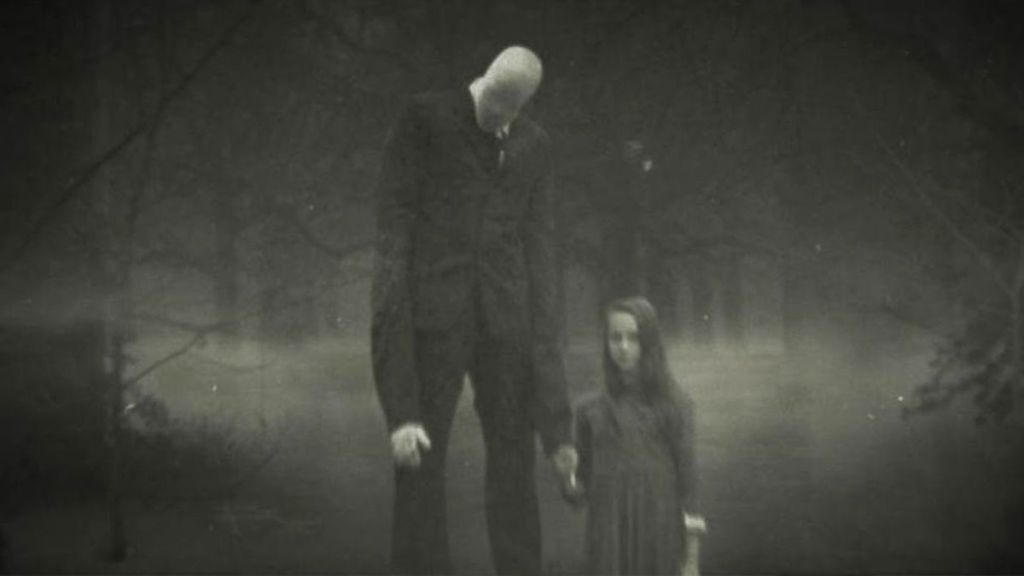
I can bet that if you’re between the ages of about 16-25, you’ve probably encountered these stories in one form or another when you were a kid. Be it Jeff the Killer and his edgy fanbase, or the Russian Sleep Experiment you were convinced really happened. I mean, everyone’s heard of Slenderman. An unfortunate characteristic of these online horror stories is that the majority of them were, for the most part, pretty badly written and executed. Sure, they were pretty spooky reading them in your childhood and early teens – but if, like me, you’ve ever been on a nostalgia trip and reread any of these stories, you’ll soon discover that they just don’t withstand the tests of time – they aren’t believable anymore.

Slenderman – the blueprint for online horror.

The best example of this genre, in my opinion, is Ted’s Caving Page, an ancient angelfire journal site documenting the experience of our titular Ted in exploring a newly-discovered cave. Everything about this site, from the technologically primitive, wall-of-text style of the early 2000s personal blog pages to the click-through images make this story feel downright uncomfortable, a relic of the internet annals that you’ve accidentally stumbled across and probably shouldn’t be looking at. It’s a meta, fourth-wall breaking fear that only internet horror stories and ARGs can really have – not only is this story pretty spooky, but the website itself also feels somewhat uncanny in it’s elementary technology.

Ted prefaces his story with three disclaimers, each working to dissuade the scepticism one approaches these sorts of stories with. It’s essentially the same as the worn out ‘this story is based on true events’ trope that’s become overused in modern horror, but being an online diary, Ted’s notes don’t feel the need to stress this. He states that his images aren’t doctored, and that he won’t reveal the names or locations involved in the story, because he doesn’t want to be held accountable for anybody’s life but his own. From the get-go, Ted’s Caving Page oozes a sense of mystery – after all, why would a personal caving journal potentially put someone in peril? You feel the sense that perhaps this opening page was written in retrospect of some awful event, urging your morbid curiosity to continue the read.

Ted’s creepy homepage.

To summarize, Ted’s Caving Page follows our titular spelunker and his friend B in the ‘bizarre’, unexplored cave somewhere within the US. It’s a slow burner, the first few pages mostly spent describing their attempts to break through a wall in order to access the cave, all the while intermittently hearing a low, rumbling noise and a strange wind originating from within. In blue text, Ted provides us with retrospective notes, bemoaning his naivety in continuing pursuit of the cave. As they push deeper and deeper inside, Ted and B hear noises, ‘like a cross between a man screaming in fear, and a cougar screaming in pain’. Ignoring them, they decide to push on. Ted makes it into the cave alone, noticing odd, symbolic drawings engraved into the rock. Later, a friend joins Ted and manages to get separated, returning traumatised and refusing to explain what happened. During Ted’s final expedition within the cave, something appears to notice his presence, chasing him out of the passageway. The journal ends abruptly, following promises to return after one, final expedition. We, the readers, are left wondering just what happened down in the dank depths of the mystery cave.

Even before anything spooky happens in the story, Ted evokes an oppressive image of the cave itself. In order to fit through the initial crawlspace, the cavers need to chip away at a hole within the rock, which is, at first, about enough to fit a hand through. This is worsened by the fact that caving is, by all accounts, an incredibly dangerous hobby, even without unseen monsters lurking in the darkness. Images of people in tiny crawl spaces within maze-like cave systems are claustrophobia inducing – one can’t even begin to imagine the fear of being stuck in those dark depths. Ted himself nods to this, naming the tightest section of the passage ‘Floyd’s tomb’ after deceased caver Floyd Collins. In the 1900s, Floyd became trapped within a cave system, passing away after 14 days. This, alongside his graphic description of ‘the squeeze’ at the entrance of the cave emphasises the very real danger of Ted’s journey itself, outside of its supernatural elements. Reaching the end of the story, you start to wonder if this reference to Floyd is some morbid premonition, on Ted’s part.

Ted pictured wriggling through ‘the Squeeze’.

As Ted and B continue to delve deeper into the cave, they choose to ignore all the warning signs. The wailing of the wind stops and starts in an otherworldly manner, their friend Joe returns from the cave bloodied and terrified, but this seems to spur them on even more. Almost in awe of the horrors they are discovering, Ted and B are blinded to the dangerous position they place themselves in with delusions of discovery and glory. At the end of the journals, the reader gets an eerie sense that the cave has truly overtaken Ted’s psyche, driving him on what is essentially a suicide mission in order to discover the true nature of what lies within the passageway they have discovered. Despite his multiple traumatic experiences inside the mysterious cave, he makes the choice to return.

In this sense, there’s something Lovecraftian about the horror in the Mystery Cave. It helps that we don’t see the unknown evil force, as our imagination can warp the thing into whatever it deems scariest. Once Ted makes his initial journey through the tight, inhospitable passageway of the squeeze, it’s as if something has awakened. He feels things watching him, moving around in the darkness just out of sight, not revealing itself to his presence as if it is part of something bigger. Strange etchings within the cave begin to glow. Rocks move around him, opening more passageways under the heart of the mountain, suggesting that this rabbit hole goes even deeper. Are things in the cave really moving by themselves, or is there something in the cave lurking in the shadows? Is this an Eldritch location, an Eldritch creature… or is it both? Even worse, with all the time taken by Ted and B to open up the passageway in the first place, does that mean that whatever’s inside can now escape, too? The ambiguity in Ted’s Caving Page doesn’t leave us enough room to determine answers to these overarching questions, leaving the mind to wander and create unimaginable horrors down in that cave.

The teeny tiny passageway Ted needed to make his way through, in order to escape the ‘thing’.

Ted’s Journal reminds me a lot of Neil Marshall’s 2005 caving film, The Descent, except with a touch more otherworldliness. Ted’s descriptions of the cave slowly reveal its malevolence, conjuring imagery of vampire legend and sealed catacombs of bygone eras, but rather than a creature feature, you get the sense that Ted and B have instead awoken some ancient evil. Narrowly escaping the thing in the cave, Ted comments on its acrid smell, ‘damp, rotting, rancid, putrid, DEATH’. In my mind, this description drives home the being’s demonic origin.

While there may be something (or some things) in the cave, it feels as though the structure itself has awareness. Reaching the end of the story, you get the sense that the cave has been watching B and Ted through all their attempts to enter, beckoning them inside only to reveal its true nature at the last moment, like a giant, rocky venus flytrap. Furthering this notion, in his last update, Ted implies that whatever he found within the cave appears to have followed him out. He notices things moving out of the corner of his eye, and sounds like those heard within the cave follow him throughout his home. This compels him to return to the cave, whilst further evoking that sense of Lovecraftian madness and impulse in whatever he found inside.

Even aside from a ‘supernatural’ reading of this story, getting lost in the dark inside an unexplored cave system is a very real and very terrifying explanation for this kind of experience – panic and disorientation affect the brain in strange ways. Our bodies are not truly adapted for such an event, and as such, the ‘otherworldy’ nature of the cave could also be explained in the context of human delusion. I have fond memories of my first reading of Ted’s Caving Page, and I’m glad to say that when the boredom nostalgia hit during lockdown, my second reading 10 years later was just as enjoyable. Though I no longer approach these internet horror stories with the same suspension of disbelief as I did back in my early teens, Ted’s story holds up, specifically because the danger of the cave itself is somewhat plausible.

In many ways, this journal is like the Blair Witch Project of internet horror. My Mum always told me a story about that film – how when we were on holiday in Florida sometime in 1999, she went to the cinema late at night and caught an early viewing. She’d seen no adverts for it (there hadn’t been much publicity here in the UK) and as such, genuinely believed the events of the film were real. Stumbling across Ted’s Caving Page with no prior context or knowledge, I can see how someone could make a similar assumption, leaving them to speculate about exactly what Ted found down in those caves. Even more chilling, Ted reminds us that only a short while away from our homes, there might just be a cave waiting to be explored. If one were to assume the story’s truth, this also implies the existence of such Eldritch horror all over the world, just waiting to be discovered and unleashed.

What’s lurking down there?